
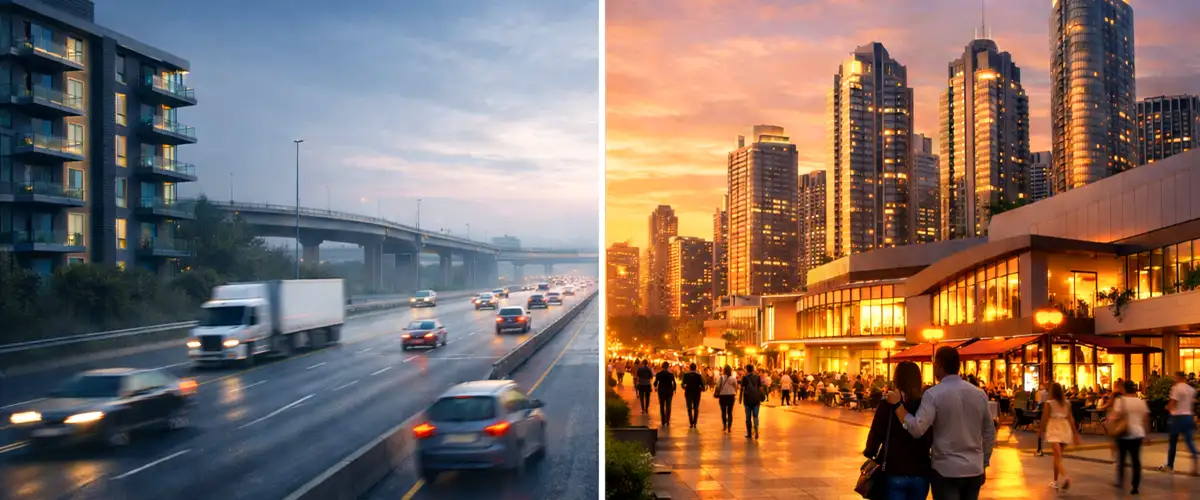
MMR Property Investment 2026 is shaping buyer decisions in a major way, as the ultimate real estate dilemma often boils down to a single choice: do you prioritize the vibrant, high-energy pulse of the urban core, or the seamless accessibility and connectivity of a highway-adjacent residence? In 2026, as the Mumbai Metropolitan Region (MMR) undergoes a massive infrastructure overhaul, the lines between these two lifestyles are blurring.
For the modern investor and homebuyer, the decision isn’t just about the view from the balcony—it’s about long-term capital growth, daily convenience, and personal well-being. This guide breaks down the strategic trade-offs of both locations to help you secure a high-performing asset.
1. The Proximity Factor – Strategic Connectivity Advantages
Living near a major arterial road or expressway offers a “time-saving premium.” In a city where every minute counts, having immediate access to the Eastern Express Highway, Western Express Highway, or the upcoming Coastal Road extension is a massive buyer-signal.
- Seamless Commutes: Properties near highways slash travel time to commercial hubs, making them highly attractive to working professionals.
- Rapid Urbanization: Highway corridors often see the fastest development of transit-oriented infrastructure, including new metro lines and multi-modal hubs.
2. Urban Core Realities – Living In The City Center
The “city center” is more than just a location; it is an ecosystem. Proximity to established business districts and heritage zones offers an unmatched social fabric. However, this comes with the challenge of saturated markets and higher entry costs.
- Walkability Score: In the heart of the city, everything—from gourmet dining to specialty healthcare—is often within walking distance.
- Social Infrastructure: Saturated urban centers possess a mature network of schools and hospitals that newer, highway-adjacent pockets are still developing.
Comparative Snapshot: Highway vs. Urban Core
| Feature | Highway Proximity | City Center (Urban Core) |
| Price Point | Competitive / High Growth | Premium / Saturated |
| Commute | Excellent for Inter-city travel | Ideal for Intra-city localized travel |
| Noise Levels | Higher (Needs Soundproofing) | Urban hum (Varies by street) |
| Appreciation | High Potential (Infrastructure led) | Stable & Consistent |
| Rental Demand | High (Tech/Corporate tenants) | High (Luxury/Legacy tenants) |
3. High Appreciation Worth – The Highway Growth Curve
Investors often find that capital appreciation is more aggressive along highway belts. As the government pumps funds into projects like the Thane-Borivali Twin Tunnel or New Thane Station, these peripheral zones transition into “premium micro-markets.” Buying here during the under-construction phase allows you to capture the “infrastructure lift”—a surge in property value that occurs once the project reaches completion.
4. Cons Of Highway Living – The Environmental Trade-off
While the connectivity is unbeatable, living directly on a main road requires smart architectural choices. Noise and air quality are valid concerns. However, modern “A-grade” developers are solving this with:
- Acoustic Engineering: Double-glazed windows that block out 90% of external traffic sounds.
- Vertical Greenery: Using landscaping as a natural air filter and sound barrier.
5. The Investment Perspective – ROI & Rental Yields
From a transactional signal standpoint, highway-adjacent properties often offer superior rental yields. Corporate tenants and frequent flyers prioritize ease of travel above all else. A home that allows a 15-minute commute to an IT park or an airport is rarely vacant. Conversely, city center properties may offer lower yields but represent a “blue-chip” asset that holds value even during market downturns.
6. Future-Proofing – The Role Of Mixed-Use Developments
In 2026, we are seeing the rise of “integrated townships” along highways. These projects aim to bring city-center convenience to the highway corridor. By providing internal shopping malls, office spaces, and parks within the residential gates, they eliminate the “cons” of living away from the city core while retaining the “pros” of elite connectivity.
Strategic Decision Checklist
- Identify the Catalyst: Is there a major road or metro project nearing 70% completion nearby?
- Assess the Layout: Does the project offer sufficient internal silence and green buffers?
- Verify Liquidity: Is the micro-market seeing high transaction volumes in the resale segment?
- Study the Demographics: Who are the neighbors? High-income professionals signify a rising neighborhood status.
Finalize Your Dream Home With Expert Guidance
Whether you are drawn to the electric energy of the city center or the strategic accessibility of the highway, the right choice depends on your financial goals and lifestyle aspirations. The window to enter high-growth corridors is narrowing as infrastructure projects conclude.
Secure Your High-ROI Residence Today
Contact our Investment Consultants: +91 9860949793
Explore High-Growth Projects: www.imperialbuildcon.in/projects/vakratunda-anantaraa